 REVIVE YOURSELF SHOP

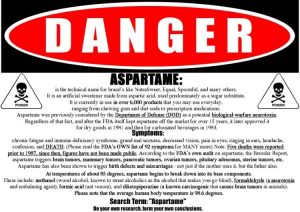
Aspartame. NutraSweet®. Canderel®. Pal Sweet Diet®. AminoSweet®. These are all names for aspartame.
The reality is it doesn’t matter what you call it, Aspartame. NutraSweet. AminoSweet. – it is still the same toxic chemical compound that scientific studies confirm causes brain lesions, cancer – such as leukaemia and lymphoma, memory loss, fetal deformities, headaches, dizziness, depression, insomnia, organ failure, birth defects, seizures, ADHD, and weight gain.
Right now articles are spreading across the internet about aspartame being renamed to AminoSweet, and it’s good that they are so that we can get this message out to the general public so they are not fooled by the sly tactics of these super wealthy companies that are only keen on protecting their profits and not your health.
Companies changing the name of a toxic compound to fool the general public isn’t uncommon, you just have to look at the 100 different names for MSG there are now after health issues were connected to the highly toxic ingredient and sales began to decline.
So let me give you some important information about AminoSweet’s history so you understand what’s really going on.
In a nutshell, aspartame is being renamed and replicated to be like the money-making 1982 American marketing campaign claiming that aspartame is all natural because it is made from basic amino acids.
Aspartame’s manufacturer, Ajinomoto Company, renamed aspartame to AminoSweet in 2009 in hopes of increasing their declining sales.
I hope you aren’t fooled by this.
The Ajinomoto Company states on their websites that they are the world’s “#1 Amino Acid Science Company.” Since 1908, they have been a world leader in the refining, blending, and pulverising of amino acids.
They claim that they manufacture the world’s finest pharmaceutical grade amino acids, and they also claim that the two amino acids they use in aspartame are all natural.
Global scientific research has discovered that the amino acids found in aspartame are not natural at all, and are actually derived from GM amino acids.
On top of that numerous peer-reviewed studies published by over 150 independent scientist – not the studies that have been bought and paid for that always get referred to when these debates hit the headlines – in the 1980s revealed that aspartame has a damaging effect on the brain.
Researchers from the Massachusetts Institute of Technology (MIT) discovered that aspartame “can generate major neurochemical changes” in the brain. Since it’s an “excitotoxin,” aspartame is known to damage the brain, as well as the central nervous systems of people who consume it, especially children.
One study published in the Journal of Neurotoxicology and Teratology in 1984 concluded that excitotoxins like aspartame “may produce blood elevations high enough to cause damage to the nervous system of young children, damage which is not detectable at the time of occurrence but which may give rise to subtle disturbances in neuroendocrine function in adolescence and/or adulthood.”
Many more studies conducted in the 1990s, 2000s, and beyond have reiterated these findings, adding that aspartame consumption can impair memory response and retention and damage neurons in the hypothalamic region of the brain. Mental retardation and various other forms of brain damage have also been linked to aspartame consumption, side effects that the government in its continued approval of the chemical drug refuses to address.
Despite continued efforts by the industry and government to keep this damaging information about aspartame under wraps, the internet and other uncontrolled environments where news is circulated have succeeded in waking many people up to its dangers.
However, now consumers have to worry about name changes like “AminoSweet” that attempt to once again pull the wool over their eyes when it comes to detecting artificial sweeteners in the foods they eat.
Since acquiring ownership of the aspartame business from Monsanto in 2000, Japanese drug company Ajinomoto has been working hard to rebrand and recreate aspartame in order to boost its acceptance by the public. One of these is renaming it to sound more “natural,” even though it’s still the same old chemical that’s also sold under names like “NutraSweet” and “Equal.”
So make sure you keep a lookout for this toxic and health destroying compound.
Luckily there are plenty of other natural sweeteners such as stevia, honey, lukanto, sukrin gold, coconut sugar and maple syrup that you can purchase and use so it is easy to avoid the health-damaging effects of Aspartame.
Health & Happiness
Ryan
P.S. If you have been struggling with your own health issues and would like to see if or how we could help you then click the link here, fill out the form and Ryan or one of the team will be in touch as soon as possible.